Monday, March 12, 2018

5th grade- Decision making #3


5th grade is continuing to talk about decision making.  During this lesson, we discussed the actual process of making a decision.  I read a story to the kids about a monkey named "watch out."  He got his name from everyone always having to yell "watch out."  The monkey did not think before he acted.  He met another animal who was wise, and told him about CeeCeeDe.  Choices, consequences, decision.  He explained the process of thinking about choices, thinking about what consequences will be because of the choices we make, and then making a decision based on all of that information.  Before long, his name changed to CeeCeeDe, because of his new choices.  
I then gave the kids some examples of how they could practice using this process. They then worked in groups to write out this process, with a problem they were given.
Ask your 5th grader about CCD!

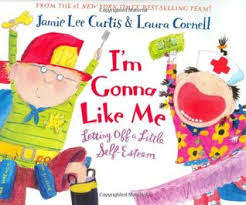
4th grade- self esteem


We read this book.  We discussed the definition of self esteem- confidence in one's own worth or abilities, self respect.  We talked about how self esteem can be on a scale- high, low, or in the middle. I asked the kids to think to themselves where they thought their self esteem is on the scale- do they believe in themselves- that they are good, they make mistakes and that's ok, they are capable; or do they often put themselves down- think they're not good enough, get really upset when make a mistake, etc.
We then made a self esteem shield.  The kids decorated their shield with what they think makes them who they are- what makes them feel good.  I explained that sometimes, life is hard (reminded of our coping discussion).  It might make our self esteem dip a little.  This shield is for them to keep in a safe place so that if they get in a low time, they can pull it out and remind themselves what makes them feel good- the shield should boost them up.

4th Grade Coping- Lesson #3


During this last coping lesson, the kids were asked to look at their attitude and how their thoughts are effecting their actions.  We discussed the glass half full/empty analogy- and how that might cloud your thoughts.
We defined attitude- how you act.  Our thoughts lead to attitudes- your attitude depends on how you see a situation- such as the glass.
I gave 3 examples of attitudes:
*red- "fiery red"- blames everyone else
*blue- "poor little me"- sees things worse than they actually are
*yellow- look for a + and a - in the situation- don't allow negative events to ruin their attitude.

The kids then put on sunglasses and pretended to be these different attitudes, after I gave them a situation.
*example- you're driving and you're late- a car pulls in front of you and goes 35 in a 55.
*red- "hey, what do you think you're doing, I can't believe they gave you a license,  you're making me late..."
*blue- "aww man, this always happens to me, I'm going to be late, my boss is going to be mad, I'm going to lose my job, why even try"
*yellow- "oh no, just when I thought I was going to be on time- I'm only a few minutes late, I'm sure my boss will understand. Tomorrow I will leave 10 minutes earlier."
*other examples we used- strike out and lose the game, your brother gets to go see a movie and doesn't invite you, you study hard but fail a test.

We discussed these attitudes, and decided that yellow is the best to have, but you have to work at it- it doesn't come easy.

4th grade Coping- Lesson #2


4th grade continued their discussion about coping.  We talked about a time in which we have been disappointed.  I wanted to point out that everyone, at some point in their lives, has felt this way- it's a normal feeling to have.  I find out that kids start to feel these feelings and think they are alone in what they are feeling; it's important to me to point out that sometimes life can be disappointing- and to expose the kids to others who have felt the same way.
We talked about how these disappointing things that happen are usually over things we do not have control over.  We discussed a roller coaster, and how life sometimes feels like we are on one- there are highs and there are lows.  We discussed some of these.   The kids then did some reflecting and wrote some personal thoughts down- some highs and lows they have personally had.  They were also asked to come up with a few strategies that will help them, when they are caught in a "low" spot.  

3rd grade- study skills unit- #3


Helen the honeybee came back today to share a new message about the importance of being a good worker.  Today the message was about paying attention.  The kids learned from Helen about how the bees pay attention- they do special dances for each other to tell them where the flowers are.  The kids learned about the 5 bees of paying attention- 
1. "bee" looking at the speaker.  
2. "bee" listening to the speaker.   
3. "bee" quiet while someone is speaking.
4. "bee" thinking about what the speaker is saying.
5. "bee" signaling your readiness to pay attention by having your hands in your lap.
The kids completed an exit ticket on their iPads about what we learned today.

3rd grade- study skills unit- #2


Helen the honeybee came back today to discuss another important work habit.  The message she had to deliver today was about the importance of following directions.  The kids learned about how important it is for bees to follow directions- the directions are for making honey.  There are specific steps the bees have to complete, in order, for the honey to be made correctly.  Helen then connected this to the kids and their learning- it is important for kids to follow directions, too.  The kids then did an activity on their iPad, with the ClassKik app- they answered an exit ticket about what we learned today.

2nd Grade- Study Skills unit- #2


GWC checking chipmunk came back with another lesson!  Today his message was about the importance of setting goals.  The kids learned from GWS about the importance for chipmunks to set goals- to collect food for the winter- to be able to survive during the cold months.  The learned from GWC it is important for them to set goals in school, too.  GWC teaches the rules to setting goals- decide what task you want to accomplish, when you will start, and make a plan to complete the work.  The kids practiced writing a goal.  GWC will be back again to discuss another important work habit!